
You love your dog. You love your yard. What you probably don’t love is the question that nags at you every time you glance out the window: Is it time to clean that up again already?
The truth is, there’s no one-size-fits-all answer, but there is a right answer for your specific situation. How often you should scoop depends on how many dogs you have, the size of your yard, and how much time you realistically have to spare. Let’s break it down.
The Quick Answer
For most households, the gold standard is scooping at least once or twice a week. But “most households” isn’t yours, so here’s a more tailored guide.
Your Ideal Scooping Schedule by Dog Count
One Dog
A single dog produces a surprising amount of waste, roughly 275 pounds a year. For one dog, cleaning once or twice per week keeps things manageable and prevents buildup. If you have a small yard, lean toward twice a week so waste doesn’t dominate the limited space.
Two Dogs
Two dogs essentially double the workload. Aim for two to three times per week. Waste accumulates faster than you’d expect, and the odor and health risks climb right along with it.
Three or More Dogs
With a multi-dog household, every other day to daily cleanup is ideal. At this volume, even a few days of skipped scooping turns your yard into an obstacle course and a health hazard.
Your Schedule by Yard Size
Small yards show waste accumulation fast. There’s simply less room to “spread out,” so frequent cleaning (twice a week minimum) keeps the space usable and clean.
Large yards might seem more forgiving, and in some ways they are, but they come with a catch: it’s much easier to lose track of where waste is hiding. A consistent weekly or twice-weekly sweep ensures nothing gets missed and left to break down in the grass for months.
The Hidden Cost of Letting Waste Pile Up
Skipping cleanup for “just one more week” feels harmless. It isn’t. Here’s what’s actually happening in your yard while waste accumulates:
Health Risks Multiply Fast
Dog waste is a breeding ground for harmful bacteria and parasites, including E. coli, Salmonella, roundworms, hookworms, and Giardia. These pathogens can survive in your soil for months or even years, putting your kids, your pets, and you at risk every time someone steps outside.
Your Lawn Pays the Price
The high nitrogen and acidity in dog waste burns grass and throws off your soil’s pH. Let it sit for weeks, and you’ll be looking at yellow patches, dead spots, and thinning turf that’s expensive and slow to repair.
It Attracts Pests
Accumulated waste draws flies, rodents, and other pests to your yard, turning a minor chore into a bigger problem.
The Odor Becomes Unavoidable
What starts as a faint smell on a warm day becomes a backyard you can’t enjoy. Regular cleanup keeps your outdoor space actually usable.
Rain Spreads the Problem
Every rainfall washes bacteria and contaminants from sitting waste into your soil and local storm drains, spreading the mess far beyond where it started.
The Real Challenge: Consistency
Here’s the honest truth. Most pet owners know they should scoop more often. The problem isn’t knowing, it’s finding the time. Between work, family, and everything else, yard cleanup is the easiest chore to push to “later,” and later has a way of becoming next month.
That’s exactly where we come in.
We Offer Flexible Cleanup Frequencies
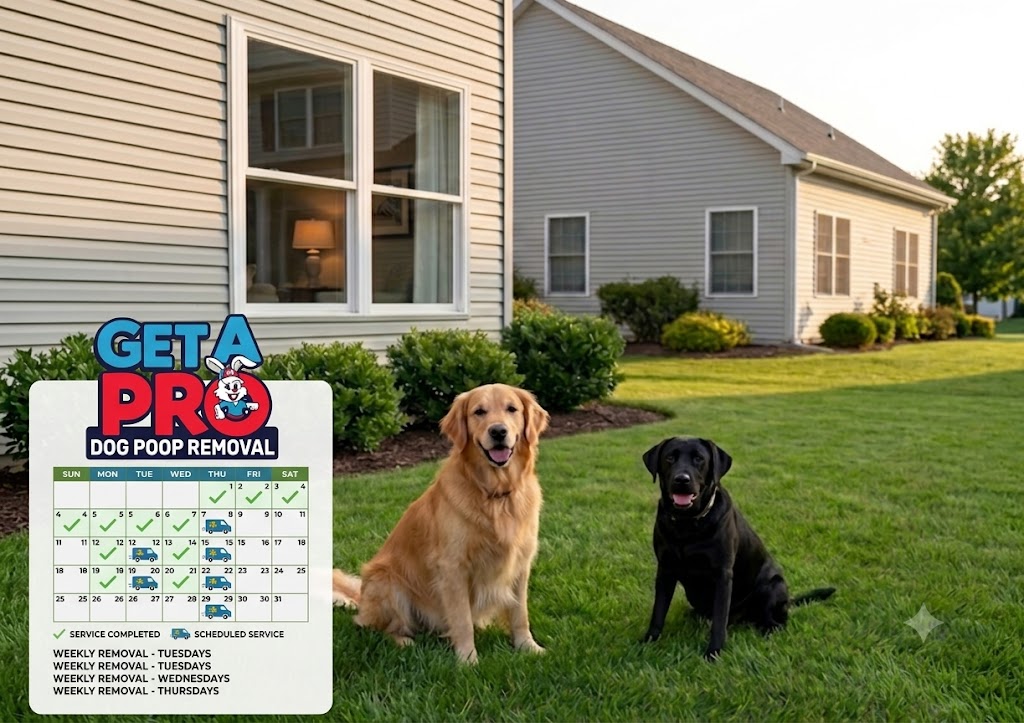
You shouldn’t have to force your life around a rigid cleaning schedule. Whether you need daily, twice-weekly, weekly, or biweekly service, we build a plan around your dogs, your yard, and your lifestyle, not the other way around.
Have one dog and a small yard? We’ve got a frequency for that. Run a busy multi-dog household? We’ll keep things spotless without you lifting a finger. As your needs change, your schedule can change right along with them.
No buildup. No health risks. No guilt every time you look out the window. Just a consistently clean, safe yard you can actually enjoy.