Not every surface on your home can take the same beating. Reach for the wrong method and you can strip paint, carve lines into wood, or force water behind your siding — turning a $300 cleaning into a four-figure repair. Here’s how to know which one your home actually needs.
What’s the difference?
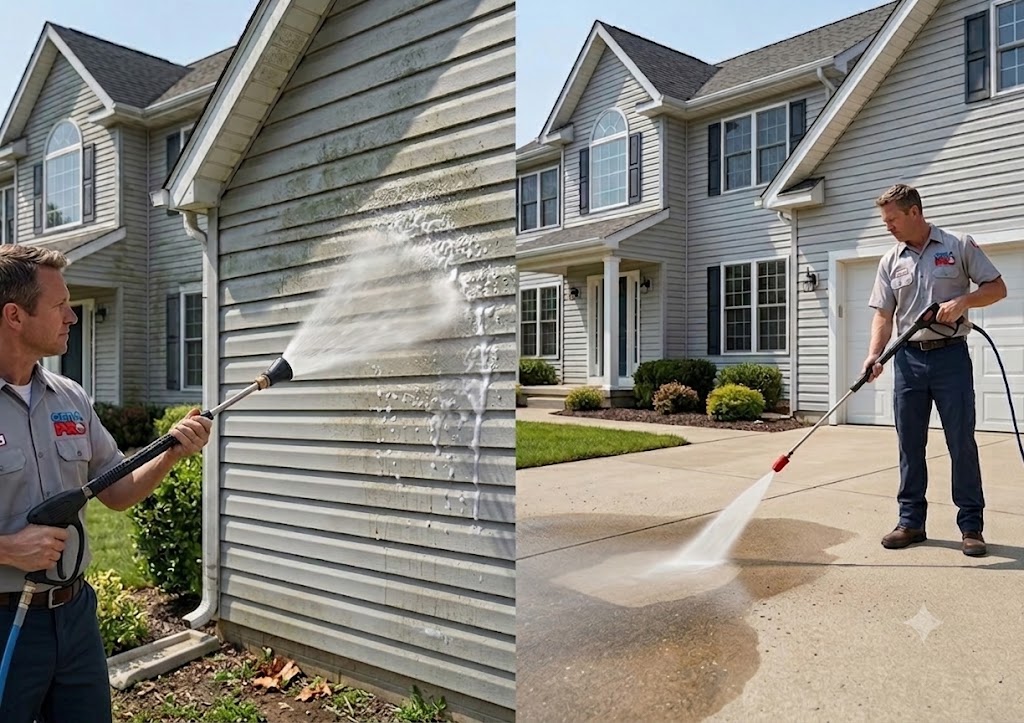
Pressure washing uses high-pressure water — often 2,000 to 4,000 PSI — to blast away dirt, grime, and stains. The cleaning power comes from raw force. It’s ideal for hard, durable surfaces that won’t crack or splinter.
Soft washing uses a low-pressure spray (think garden-hose strength, under 500 PSI) combined with specialized cleaning solutions. Instead of blasting grime off, the solution kills mold, mildew, algae, and bacteria at the root, then rinses clean. It does the work chemically, not by force.
The simplest rule: high pressure cleans hard surfaces; soft washing cleans delicate ones.
Which surfaces need which?
Use pressure washing for:
- Concrete driveways and sidewalks
- Brick patios and pavers
- Unsealed masonry
- Metal fencing and garage floors
Use soft washing for:
- Vinyl, aluminum, and wood siding
- Roof shingles (high pressure voids many shingle warranties)
- Stucco and EIFS
- Screens, soffits, and outdoor furniture
- Painted surfaces
Can pressure washing actually damage siding?
Yes — and it’s one of the most common DIY disasters. Vinyl siding is installed in overlapping panels with gaps designed to let the wall breathe. A high-pressure stream can force water up and behind those panels, where it gets trapped against your sheathing and insulation. The result: hidden mold, rot, and moisture damage you won’t see until it’s expensive. High pressure can also crack older or sun-brittled vinyl outright.
Roofs are even more fragile. Pressure washing asphalt shingles strips away the protective granules that give them their lifespan — and most manufacturers explicitly warn against it. That black streaking on your roof is algae, and it needs a soft-wash treatment, not a power blast.
Why this matters when you hire
Here’s the catch: many homeowners (and even some under-trained operators) own a pressure washer but don’t understand when to dial it down. A true professional knows that the right approach often means less pressure, not more — and carries the cleaning solutions and equipment to do both.
When you hire through our marketplace, every Pro is vetted to understand surface-appropriate cleaning. That means your siding gets soft-washed, your driveway gets the full-power treatment it needs, and nothing on your home gets accidentally destroyed in the process.
The bottom line: matching the method to the surface is the single most important decision in exterior cleaning — and it’s exactly the kind of judgment you’re paying a professional for.
Ready to get it done right? Get Free Quotes from vetted Pros who know the difference between a surface that needs power and one that needs a gentle touch.