
Everybody wants to be their own boss. Almost nobody wants to start with dog poop. That’s exactly why this business works.
Pet waste removal is one of the lowest-cost, fastest-to-launch businesses in the country — and because most people are too squeamish to consider it, the demand far outpaces the competition. If you’re willing to do honest work that others avoid, you can turn a few hundred dollars and a free weekend into a recurring-revenue business. Here’s the transparent, no-hype breakdown of how to do it for under $500.
Step 1: Handle the Legal Basics
Before your first yard, get the boring stuff right — it protects you for years.
- Register your business. Most new operators form an LLC for liability protection and tax flexibility, though you can start as a sole proprietor. Registering a name (a DBA) is inexpensive in most states.
- Get a business license. Most areas just require a general business license, which is typically cheap and easy to obtain. A few states have extra requirements for pet waste handling — check your local rules.
- Line up insurance. This is the one cost people underestimate. General liability is affordable, but if you drive to clients, commercial auto insurance can run roughly $600–$2,400 per year depending on your record and location. (Localize these figures for your market.)
Quick disclaimer to keep in mind: licensing, insurance, and waste-disposal rules vary by state and municipality. Confirm your local requirements before you launch.
Step 2: Buy Only the Equipment You Actually Need
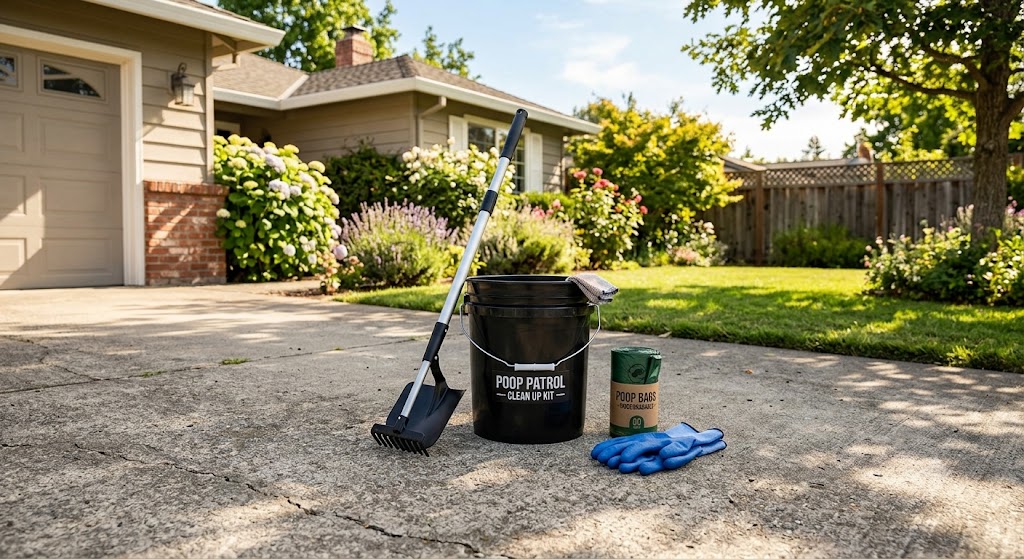
Here’s the good news: the gear is cheap. You can start a bare-bones operation for under $200 — a sturdy scooper or rake, a dustpan-style pan, a five-gallon bucket, heavy-duty trash bags, and good gloves. Add boots, hand sanitizer, and a basic deodorizer spray and you’re still well under $500.
You probably already own the two most expensive “tools”: a phone and a vehicle. That’s the whole point — this is a business you can start with what’s in your garage right now.
Step 3: Understand the Money
This is a recurring-revenue business, and that’s its superpower. You’re not hunting for a new sale every day — you’re building a route of weekly customers who pay you week after week.
- Typical pricing: around $15–$20 per week for one dog, with a few dollars more per additional dog. One-time initial cleanups (for overgrown yards) often run $75–$125.
- Margins: well-managed pet waste businesses commonly keep a healthy share of every dollar, thanks to low overhead and tight routing.
- Working capital: keep a cushion. A good rule is several months of operating expenses (fuel, bags, insurance) saved before you rely on the income. (Figures are national placeholders — adjust to your area.)
The math is simple: a few dozen weekly yards, scheduled into efficient routes, becomes steady, predictable income.
The Hardest Part Isn’t the Scooping
Notice what every step above didn’t solve: how you actually get customers. That’s the part that quietly defeats most first-time owners. You can buy a scooper in five minutes. Building a website, setting up booking and payments, running ads that convert, and earning trust as a brand-new name can take months and cost far more than your equipment ever will.
This is exactly where Get A PRO changes the equation. Instead of starting from zero, you launch as a Get A PRO provider with the hardest, most expensive pieces already built for you: a professional booking page, real local leads from families searching for the service, and done-for-you marketing. You bring the hustle; we bring the system that gets you booked.
And unlike a pet waste franchise — which can cost tens of thousands of dollars upfront plus an ongoing royalty on your sales — Get A PRO keeps you an independent owner. You get turnkey support without signing away a permanent cut of what you earn. (Confirm current Get A PRO program details on the official page.)
Start Your Dog Waste Removal Business — launch fast with leads, tools, and support.
Become a PRO and book your first customer instead of chasing one.