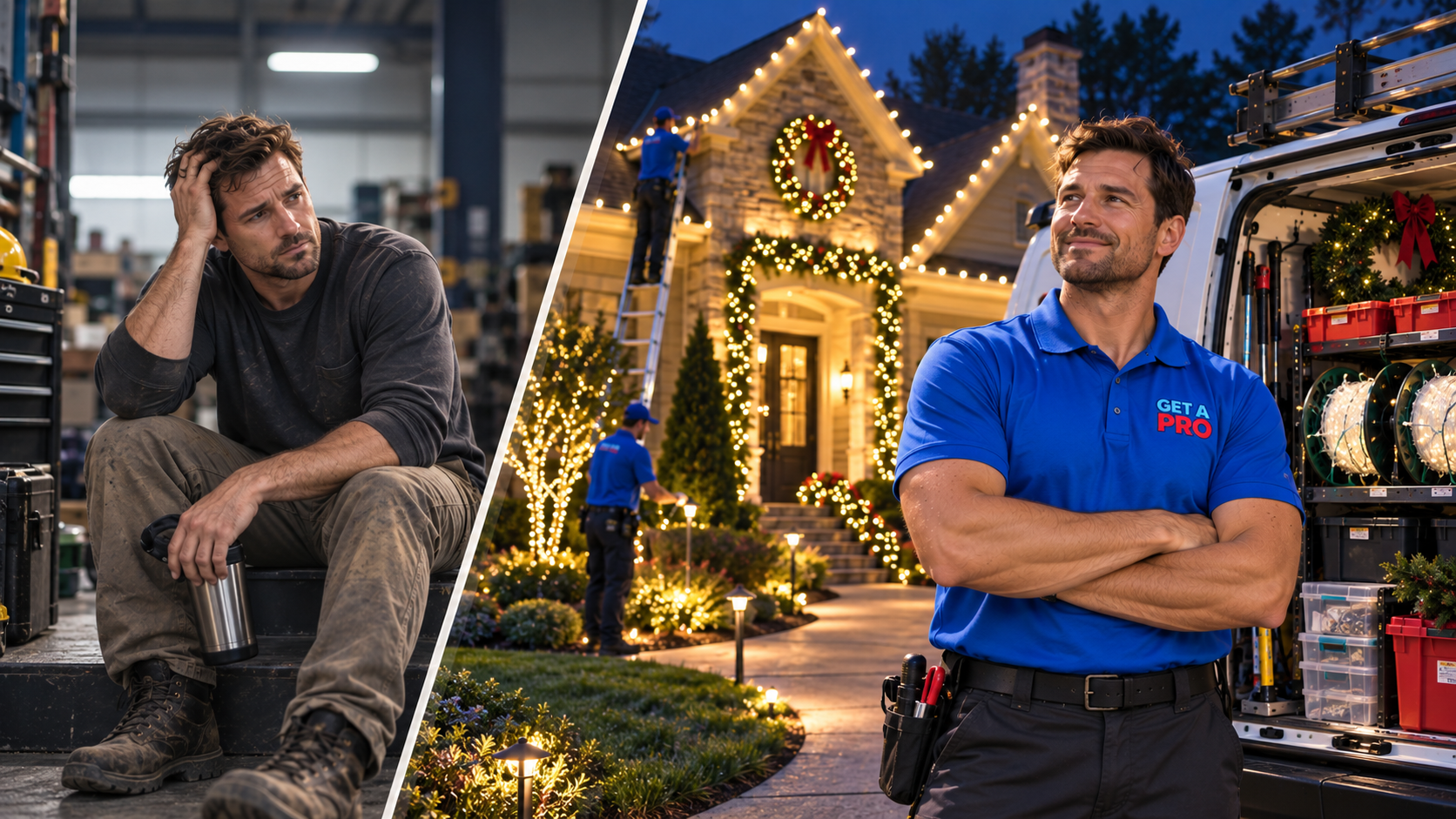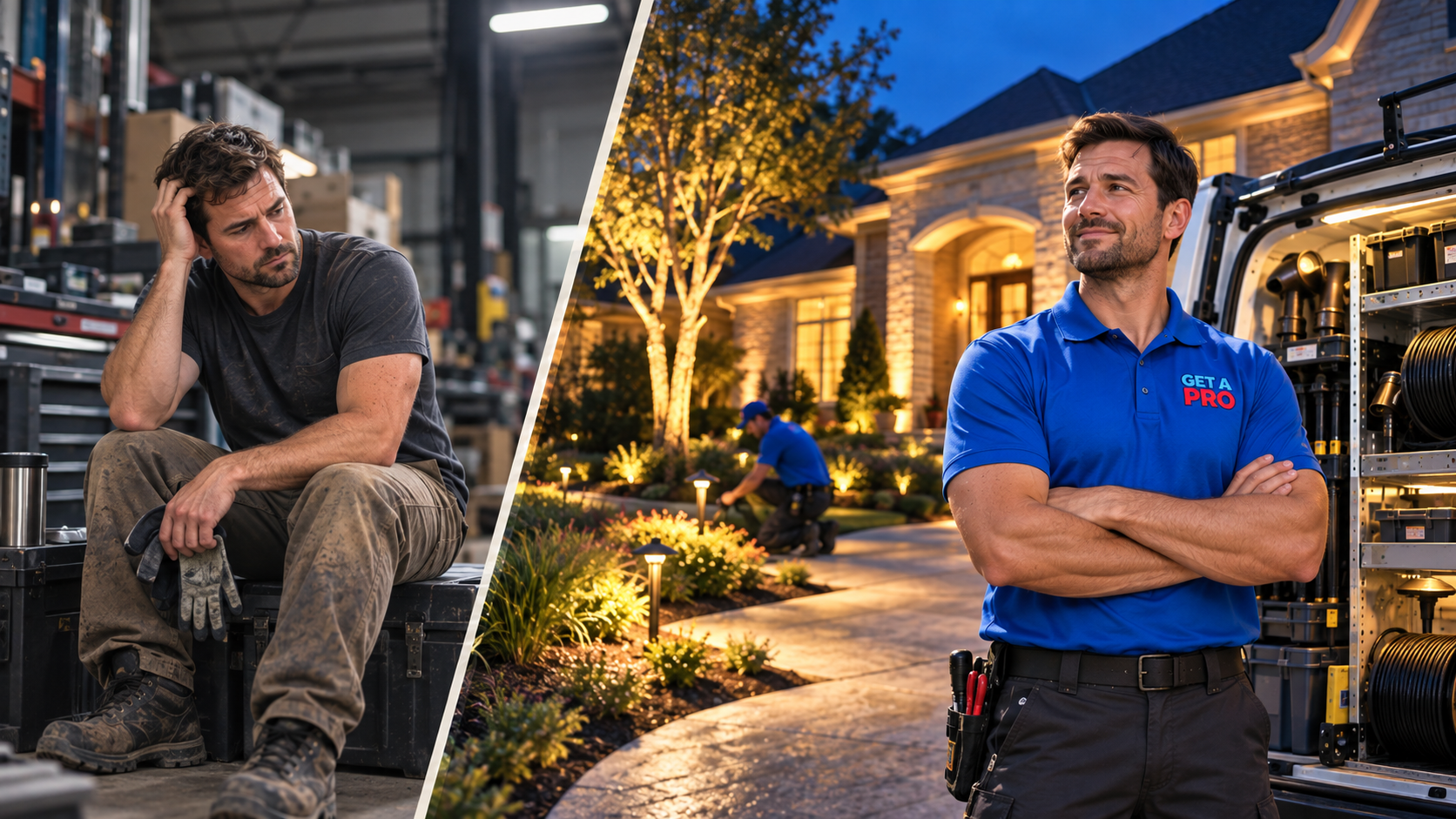

You spent years getting the outside of your home right. The stone on the entry columns. The Japanese maple you finally got established. The paint color you agonized over for three weekends.
And then the sun goes down, and all of it vanishes.
For roughly half the year in most of the country, the majority of people who see your home — neighbors driving by, guests arriving for dinner, you pulling into your own driveway — see it in the dark. A dark house isn’t a neutral impression. It’s a missed one.
What “dark” actually costs you
Most homeowners think of outdoor lighting as decoration. It’s closer to infrastructure, and the absence of it creates three real problems.
Curb appeal ends at sunset. Every design choice you paid for — architecture, masonry, mature landscaping, a well-kept lawn — is invisible for the hours when most people actually see the front of your home. Professional lighting extends the return on everything else you’ve already invested in.
Walkways become hazards. Steps, grade changes, and transitions between hard surfaces are exactly where people fall, and they’re exactly what disappears first in low light. This matters most for the people you care about most: aging parents, small kids, guests who don’t know your property.
Dark corners read as opportunity. Side yards, back gates, the gap between the garage and the fence line — unlit zones are where a property feels least secure, and where you feel least comfortable walking out at 10 PM to move a car.
What good lighting looks like (and what bad lighting looks like)
Here’s the counterintuitive part: the goal is not brightness. The goal is contrast and hierarchy.
Amateur lighting floods everything evenly, which flattens a house into a glowing white box. It creates glare that makes it harder to see, not easier. It puts fixtures where they’re visible instead of where they’re effective.
Professional lighting is layered. A few well-aimed uplights graze a stone facade and reveal its texture. Path lights are spaced to guide, not to line up like an airport runway. Downlighting from a tree canopy mimics moonlight across a lawn. Beam angles, color temperature, and fixture placement are all chosen so you notice the house — not the lights.
Why the fixture matters more than you think
Outdoor fixtures live outside. That sounds obvious until you’ve watched a set of aluminum path lights corrode, tilt, and fail in three seasons. Solid brass and stainless steel components cost more upfront and stop being a recurring expense. Wiring buried and connected properly with waterproof connectors doesn’t become a callback in year two.
The difference between a lighting system and a pile of lights is design, materials, and installation. All three, or none of them matter.
Where Get A PRO fits
Get A PRO connects homeowners with background-checked, vetted outdoor lighting professionals who design systems for your specific property — not a template pulled off a shelf. Every project starts with a free consultation and custom design, uses premium weather-rated fixtures, and ends with a post-completion walkthrough where your Pro fine-tunes fixture aim after dark and walks you through your timers and smart controls.
Landscape lighting packages start at $1,595 for eight solid brass fixtures with a stainless transformer, timer/photocell, waterproof connectors, and full installation. Larger architectural and whole-home designs are quoted custom, because no two properties light the same way.